
10.0.0.0.1 Admin Login
To Open the admin panel, enter 10.0.0.0.1 in your browser’s address bar or use the link below. This will take you directly to the Router’s Login page, where you can manage your network settings.

10.0.0.0.1 WiFi Login – Piso WiFi Pause Time, Admin Access and Troubleshooting
It can be a bit frustrating to type 10.0.0.0.1 on your web browser and find an error when you only want to access your WiFi login page, check a Piso WiFi session or pause remaining time of the internet. The good news is that it should not take you to realise your problem usually is far less complicated than a router which is broken or always disconnected right?
10.0.0.0.1 is the standard IPv4 address for most people and may have been searched on the Internet by Others! Most of the time these users actually seek 10.0.0.1 which is a private ip address commonly used to access some routers and Piso WiFi portals on local connections. There are not five parts of an IPv4 address, there are four.
What is the difference between 10.0.0.0.1 Piso Wifi and 10.0.0.1, how WiFi Login works, Piso WiFi pause and resume features works or find your real gateway address along with solutions for most common login problems Guidance near you in this Guide?
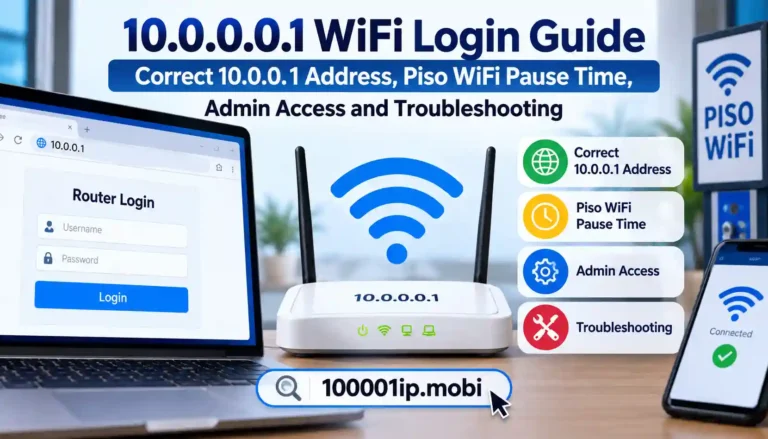
What Is 10.0.0.0.1?
Search term 10.0.0.0.1 usually shows up whenever a person is attempting to access the router configuration page, Piso WiFi portal or at least a local network administration screen. But there is an important technical distinction. Standard IPv4 addresses can be anything other than 10.0.0.0 or 1. An IPV4 address comprises four numbers in decimal form, separated by periods. Each number (known as an octet) can be any value between 0 and 255. An IPv4 literal in the URI specification describes a format of four decimal components separated by dots, while an IPv4 address in the Internet Protocol specification can be defined as four octets totaling 32 bits.
The extra. 10.0.0.0.1 wifi login does not always lead to the page that people expect and this is due to 0. So when in search of 10.0.0.0.1 wifi the first address you will typically test should be 10.0.0.0.1 Piso Wifi Time, presuming that your device is connected to a network which really uses that gateway as well?
Why 10.0.0.0.1 Matters in 2026
The question of IPv4 private ranges like 10.0.0.0.1 The steady march of IPv6 notwithstanding, I’ve also been at least vaguely aware that even if I can track hundreds if not thousands of IPv4 addresses around the world using just four top-level ranges, 10/8,192.168/16 and so on are still as deeply embedded in modern networking Router login addresses like 10.0.0.0.1, 192.168.1.1 and 192.168.0.1 are still king as they’re simple, standardised, non-expensive and widely adopted by consumer and company hardware alike
To most regular users, 10.0.0.0.1 is what they enter to upgrade any key features on their network: change your Wi-Fi password, enable WPA3 encryption, set up guest networks & update firmware. For Piso WiFi Operators, it is the panel with which a paid session can be managed, time can be paused and revenue can be tracked. To sum up, whether it is to secure your home network or run a small vendor business on the internet, you must know how to access and configure 10.0.0.1.
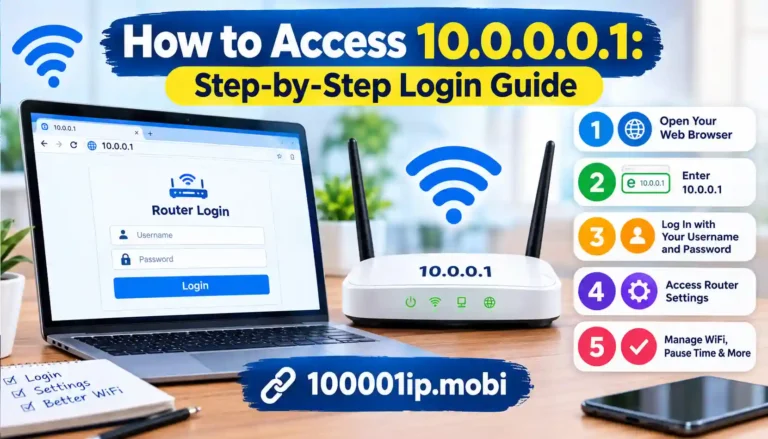
How to Access 10.0.0.0.1?
Accessing your router admin panel at 10.0.0.0.1/admin is easy once you know what to do. Users often fail just because they mistype the address or attempt to access the network from the wrong chain. Here’s how to do it properly.
1: Connect to the Correct Network
First, make sure your device is connected to the same network as the router/Piso WiFi gateway you want to connect to. The 10.0.0.0.1 page will not load if you are on mobile data or a different Wi‑Fi network (or guest network, which commonly isolates clients).
When in doubt, plug your computer directly into the router using an Ethernet cable for a connection. Enterprise and ISP gateways limit admin access to wired connections only.
2: Open a Web Browser
Start with the browser of your choice Chrome, Firefox, Safari, Edge or a basic mobile-focused browser. Do NOT search for this step, e.g. on Google or Bing: you must enter the address right into the address bar, not in the search field.
3: Enter the Correct URL
In the address bar, type exactly
- http://10.0.0.0.1
- Then press Enter or Go.
- A few critical notes here:
- Always include the http:// prefix. Certain local portals (especially Piso WiFi systems) do not redirect from HTTPS by default and will fail to load when your browser defaults to https://10.0.0.0.1.
- Do not add www before the address. Typing www. 10. 0. 0. 1 or 10.0.0.0.1. com will not work.
For example, you should avoid common typos such as “10.0 0.1”, “10.0. 0.1, 10.0‑0.1, or the erroneous 10.0.0.0.1. Four numeric octets, separated by dots — you have no spaces or dashes and especially no extra zeros in each octet of the IPv4 address.
4: Enter Admin Credentials
After the page loads, you’ll see a login screen asking for a username and password. The credentials vary depending on the manufacturer and ISP. Find below the list of general default combinations for devices that use 10.0.0.0.1 ip.
| Router / Gateway Brand | Username | Password | Notes |
| Xfinity / Comcast | admin | Printed on gateway label (Admin Tool password) | Some older models use a password |
| Cisco | admin | admin or Cisco | Varies by model |
| LPB Piso WiFi | cusadmin | High speed | Also admin / 123456789 on some portals |
| Generic / Unknown | admin | (blank) or password | Try common combos if label is missing |
| Aruba Instant On | admin | Printed on device label | Enterprise access points |
| Cradlepoint | admin | Device serial number | Cellular routers |
5: Go to Admin Panel
After you have logged in to your device, you will see many settings that will vary by the device. Common options include:
- Wi‑Fi Settings: Modify SSID (network name), password, encryption type (WPA2/WPA3), and channel selection.
- Connected Devices: Monitor the devices connected to your network, and block unknown clients if desired.
- Security: Enable firewall, turn off WPS, disable remote management and firmware updates
- Advanced Networking: Setting Up WAN, LAN, DNS, DHCP | Port Forwarding | Guest Network
- Piso WiFi Control: For Operators: Set session timer, pause time and measure earnings.
Troubleshooting: Why 10.0.0.0.1 Won’t Load
However, there are some users for whom the admin page at address 10.0.0.0.1 isn’t accessible even when they use the right address and login credentials. These are the most frequent reasons and here is how to solve them.
You’re Not on the Right Network
And that’s the number one reason a login fails. It simply ignores your request if your device is not on the same local network as the router or Piso WiFi gateway. Make sure you are on the right Wi‑Fi SSID or Ethernet connection and disable all VPNs, proxy servers, & mobile data that may route traffic in different directions.
Wrong Gateway IP
Not every router uses 10.0.0.0.1. Most home networks use the default 192.168.1.1, 192.168.0.1, or even 192.168.254 (which Globe and PLDT in the Philippines use). To find your actual gateway:
- On Windows, open Command Prompt and type ipconfig. Find Default Gateway in your active adapter.
- On macOS: System Settings > Wi‑Fi > Details, then look at the Router field.
- Android/iOS: Go to Wi‑Fi settings, tap your connected network, find Gateway or Router.
If your gateway is not 10.0.0.0.1 use your actual address
HTTPS vs. HTTP Confusion
Longer answer: Some older or embedded portals (Piso WiFi systems especially) do not support HTTPS on the admin page. If https://10.0.0.1 fails or shows a security warning, explicitly use http://10.0.0.1
Browser Cache or Redirect Issues
Cached redirects, SSL errors, or autocomplete errors can prevent you from accessing it. Launch the page in incognito private mode/private or clear your browser cache and cookies. A simple way is to just run your browser(like switching from Chrome to Firefox).
IP Address Conflict
An IP conflict happens when two devices in your network get assigned the same IP address such as both your router and a client device having an IP of 10.0.0.0.1 which leads to connectivity problems. Make sure there is no other device that is statically configured with 10.0.0.0.1 (if DHCP is enabled on your router).
Router Is Unresponsive or Crashed
Sometimes, the router itself may just freeze or crash and 10.0.0.0.1 is not reachable anymore. Open Command Prompt and ping the address (ping 10.0.0.0.1). If you get no reply, power cycle the router by unplugging it for 10–15 seconds and then plugging it back in. Wait up to 1–2 minutes for the reboot process to complete, then try again.
Factory Reset
When the admin password has been forgotten or changed and reset is not available, factory reset is the only option. Find the mini reset button (a tiny pinhole located at the back) and hold it for 15–30 seconds until the light blinks, then release. The router will restart and return to its factory default state with the original login ID and password.
10.0.0.0.1 Piso WiFi: Login, Pause Time & Operator Controls
One of the most commonly searched variations for this topic is piso wifi 10.0 0.1—which refers to coin-operated internet vending machines, common across Southeast Asia with the Philippines being one of its hotspots. These systems are generally set up on embedded routers or Raspberry Pi‑based gateways where 10.0.0.0.1 is defined as the local portal address,
How Users Log In to Piso WiFi
- Piso WiFi network is very easy for customers to access.
- Connect to the Wi‑Fi SSID from the vending machine (usually called Piso WiFi or an own brand),
- Launch a web browser and access the http://10.0.0.1 URL in the address bar
- The portal loads offering the option to buy time, see your remaining balance or manage a session in progress.
- The user inserts coins or scans a QR code (Depending on the grid system), they get Internet for a certain time.
Understanding 10.0 0.1 Piso WiFi Pause Time
Pause time is one of the common main features of many Piso WiFi systems, which allows you to pause your active session and the timer will hold on until the user returns. This is even more beneficial for students, commuters, or anyone who needs access in between.
So, how does 10.0.0.0.1 Pause time or help you out with each of these and other such common situations?
- Log in to the Piso WiFi network.
- Open the portal at http://10.0.0.0.1.
- Find your active session panel which generally shows the remaining time and connection status.
- While paused, tap or click the Pause Time (or Pause Session) button.
- Verify that the timer has stopped and the button is showing Resume Time or something similar.
- To continue browsing, go back to the portal and click Resume.
Some types of Piso WiFi installations allow you to apply pause time, depending on the firmware (LPB, AdoPiSoft, etc.) and operator configuration. If the option is not visible, it may be disabled by the administrator.
Operator Settings: Enabling Pause Time
As a Piso WiFi business owner, you can allow your customers to pause their time for a better experience and reuse it later. To configure this feature:
- Access the admin panel at http://10.0.0.1/admin (the username and password are different it may be admin / 123456789 or cusadmin / highspeed).
- Go to Settings or System Settings
- Look for an option that says Enable Pause Time, Pause/Resume, etc.
- Turn it on and save (may need to reboot the gateway).
When the feature is enabled, customers will see the pause button in their session portal. Depending on the firmware, operators may also set limits such as maximum pause duration per session or number of pauses.
Features of 10.0.0.0.1 Networks
If your home router or Piso WiFi gateway arrives with 10.0.0.0.1 admin panel access, you can unlock all main functionality capabilities to manage & take complete control of it as a Piso WiFi owner.
Centralized Management Dashboard
The admin interface is your one-stop for all network configs. Manage everything from a single page: monitor connected devices, set bandwidth limits and check system logs. This centralized architecture removes the need for various tools or command-line troubleshooting and allows network management for users even without a technical background.
Advanced Security Controls
Newer 10.0.0.0.1‑configured gateways come equipped with enterprise‑level security tools like WPA3 encryption, MAC address filtering and built-in firewalls. You can disable protocols such as WPS that are vulnerable, as well as turn off remote management to keep outsiders out. They also add another layer of control for Piso WiFi operators by having additional layers like captive portals and session timeouts.
Flexible Networking Options
The LAN and WAN segments allow you to gradually customize how your network works. Custom DHCP ranges, reserve static IPs for specific devices, configure DNS servers to provide faster browsing experiences and manage MTU sizes for speedier ISP performance adjustments. Port Forwarding Rules: Allow hosting servers and security camera access remotely.
Piso WiFi‑Specific Tools
Piso WiFi systems provide revenue-focused features for business users, such as coin or QR payment integration, session timers, pause/resume controls and real-time earnings dashboards, all based on 10.0.0.0.1. Advanced firmware goes one step further; some can do multi‑SSI if you want to provide separate networks for customers and administration.
Firmware Updates & System Health
Firmware updates are issued regularly, allowing you to securely fix system vulnerabilities whilst also gaining new functionality. On the admin panel, you will find a one‑click update button CPU usage and temperature status indicators and uptime. This proactive monitoring helps businesses prevent crashes and maintain consistent performance.
Advantages of Using 10.0.0.0.1
Home users and business operators benefit in different ways from assigning 10.0.0.0.1; we’ll also highlight key advantages of using this address to help customers quickly choose the most suitable IP address for their business.
Universal Compatibility
With proper configuration, 10-0-0-0-1 functions as a typical private IPv4 address that is compatible with virtually any router, gateway and network device available on the market today. No matter what equipment you have, be it Cisco enterprise gear, an Xfinity home gateway or a budget Piso WiFi kit, the login process is always the same. This uniformity reduces ambiguity and makes troubleshooting easier.
Local‑Only Access Enhances Security
10.0.0.0.1 is a private IP, so it’s unreachable directly from the public internet. This boosted seclusion keeps your admin panel secure against remote hackers but you need to change default credentials and deactivate remote management as well. For convenience, Piso WiFi, this implies that clients are unable to manipulate backend settings even when they do find the gateway address.
No Cloud Dependency
With 10.0.0.0.1‑based routers, you get complete, local control instead of modern mesh systems that rely on cloud accounts and telemetry. You can access the admin panel without having an internet connection, so there’s no vendor lock-in issue or harvesting of your data. The offline aspect is a very big plus in poor network environments.
Cost‑Effective for Small Businesses
The 10.0.0.0.1 system allows Piso WiFi entrepreneurs great opportunities and low-barrier access to the internet vending business. For DIY kits, prices start at about ₱6,000; once fully underway, the passive nature of this business only requires low supervision on a daily basis. You can then even allow things such as pause time, which increases customer satisfaction and repeat usage even more.
Scalability and Flexibility
It’s also easy to add access points, switches or other Piso WiFi machines to any 10.0.0.0.1 network if you ever want to expand it. Each unit can function as a stand-alone system or be part of an even larger managed network. Which means 10.0.0.0.1 is ready for everything from single‑room setups to multi‑location deployments with ease.
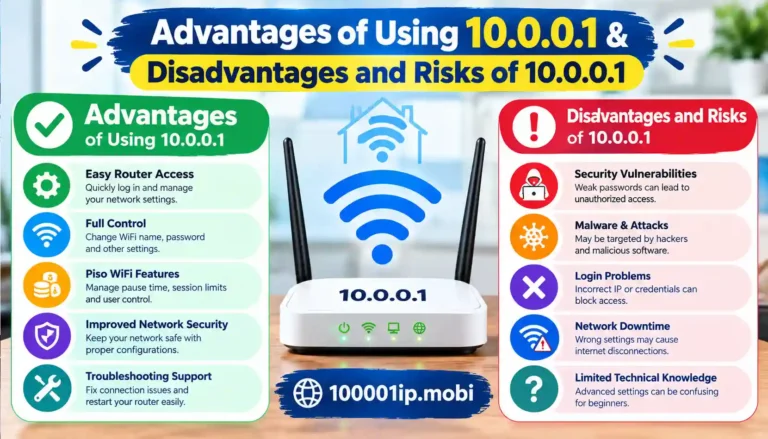
Disadvantages and Risks of 10.0.0.0.1
The 10.0.0.0.1 ecosystem has its advantages but it also comes with drawbacks. Knowledge of these limitations allows you to minimize risks and gain a deeper understanding before making decisions.
Default Credentials Are a Major Vulnerability
One of the primary risks is that most 10.0.0.0.1 devices come with default usernames and passwords to know, such as admin / admin or even admin / password. These credentials are publicly documented and often easily exploited using an automated scanning tool. If you leave them as is, anyone with access to your network or even just within reach of a Wi‑Fi signal can log into your router and reset it to their liking, stealing your connection or attacking other devices.
Limited to Local Networks
Local‑only access does increase security but also means you cannot manage your router remotely unless remote management is explicitly enabled, which carries its own risks. This can become even more challenging for Piso WiFi operators who own multiple locations unless they have on-location staff at each site or a separate solution to provide them remote access.
Firmware Update Gaps
Firmware updates are not always rolled out by manufacturers in a timely fashion, especially for budget or older devices. Unpatched vulnerabilities may still be a vector to providing an exposed pathway for older known exploits against your network. Outdated open‐source firmware with a historical lack of security patches on some Piso WiFi kits also raises the risk of compromise.
Technical Setup Requires Some Knowledge
Basic login is easy; however, advanced configurations such as configuring Permanent connectivity via port forwarding or VLANs and/or multi‑SSID Piso WiFi networks require some networking knowledge. Misconfigurations can cause downtime, IP conflicts or security holes. Translating that for business operators — it could mean spending more time learning or employing technical support. azdirtbiketraining
Dependence on Physical Location (Piso WiFi)
Success, of course, is largely driven by foot traffic and location for Piso WiFi businesses. Even the best 10.0.0.0.1 settings cannot help a machine in low‑density areas to generate revenue well. Power or ISP outages can bring services to a grinding halt; consumer confidence and revenue take a nosedive as well. azdirtbiketraining
Risk of Vandalism and Theft (Piso WiFi)
They can get into or destroy the cash boxes of Coin‑operated machines or they may steal them. Operators also need to spend on either good enclosures, CCTV or better placement of their assets. While proper registration and insurance can lessen the dangers posed, they are still an added operating cost for businesses.
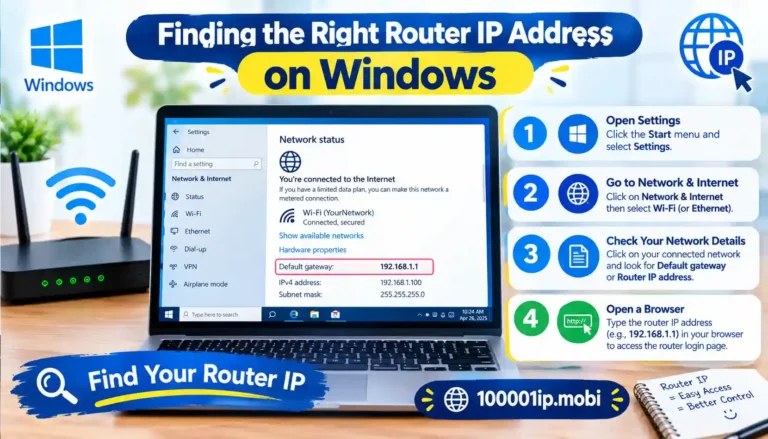
Finding the Right Router IP address on Windows
Identifying the default gateway is a relatively easy task on Windows.
Open Command Prompt and run:
- ipconfig
- Check your active WiFi or Ethernet adaptor.
- Locate the entry Default Gateway.
Those addresses look something like 10.0.0.1 or 192.168.1.1—the router (or probably gateway) your computer is actually using right now. Then you can type that address directly into your browser. This technique is especially helpful when you have tried 10.0.0.0.1, 10.0.0.1 and quite a few different 192168 without success. Now rather than guessing you are getting the gateway assigned to your device Currently.
How to Find the Gateway in Mac
In macOS, you can check the network information for your current connection. Hit on your active WiFi connection in the network settings and see its TCP/IP information. The inter face refers to the router as a gateway in depending on the Mac OS version.
Usually, the Router address mentioned is the local address you want. For command-line tool lovers, you can also get routing information with Terminal. When you now have the right address, type it into the browser without adding more points or numbers.
Finding the Router Address on Android
Interfaces for Android varies from one manufacturer to another, but the gateway is generally located in the fine print of that Wi-Fi network. Go to WiFi settings and click on the network you are connected to. Dig deep into the networking details, advanced settings, or IP information. Entries can include IP address, gateway, subnet mask, DNS and connection speed
The value next to Gateway is what we are interested about. If it shows 10.0.0.0.1 then the network seems to prove that the local gateway at 10.0.0.1 is actually the correct one. If shows you a different address use that one and do not force 10.0.0.0.1
Finding the Gateway on an iPhone or iPad
Open Settings, select Wi-Fi and tap on the information icon next to your connected network. Scroll down to IPv4 in the information and then find Router. That value allows you to identify the gateway associated with your device. Type the router address in Safari if for example, the router address is 10.0.0.0.1? This will also come very handy with Piso WiFi, this allows you to differentiate between an actual Internet problem versus just a gateway-address error.
Common Mistakes to Avoid When Using 10.0.0.0.1
Even seasoned users make basic mistakes that cause lockouts or security breaches. These are the common blunders and how to avoid them.
Typing the Address Incorrectly
For example, these variations might be → “10.0 0.1”| ” (10.0. Examples of invalid blocks include “0.1”, “10.0-0.1”, or “10.0.0.0.1”. IPv4 addresses must consist solely of four numeric octets separated by dots, with no spaces, dashes or leading zeros.
Using the Wrong Protocol
Some Portals Fail if you type S++://10.0. + 0 / 1 https: Unless the router specifically requires HTTPS, always begin with HTTP.
Searching Instead of Navigating
Indeed, searching for 10.0.0.0.1 on Google or Bing won’t lead you to that administrator page of yours! You can only have to type it into the browser address bar directly.
Leaving Default Credentials Active
Default usernames and passwords are well known. These default logins can only be changed right from the router itself, meaning anyone on your network (or even within range of its Wi‑Fi signal) can simply sign in and reconfigure it.
Ignoring Firmware Updates
If firmware is not updated, it can always be vulnerable. Regularly check for updates and install as soon as possible.
Overlooking Guest Networks
If you don’t isolate guests and IoT devices, your primary network is exposed. Always use a guest SSID for guests and smart home devices.
Misconfiguring DHCP or Static IPs
When you assign the same IP to multiple devices (say, 100001ip on your client when that is your gateway), conflicts and/or a loss of connectivity occur. Check all static assignments against your DHCP range.
Conclusion
No matter if you’re a homeowner securing your Wi‑Fi, a network administrator troubleshooting enterprise gear or a Piso WiFi entrepreneur managing customer sessions, 10.0.0.0.1 is more than an IP address – it’s your gateway to control, security and optimization. By following the steps in this guide, you can access your admin panel without problems, avoiding common mistakes like typing “10.0 0.1” or “10.0. 0.1”, and enjoy advanced functionality like 10.0 0.1 piso wifi pause time to enrich the user experience.
Your router’s default settings are seldom, if ever, secure. Change passwords, enable WPA3, install firmware updates and use guest traffic isolation. These small actions do a lot, drastically reducing your risk of intrusion and helping ensure your network performs at the highest level possible.
Even with IPv6 running alongside IPv4 for some time to come, addresses such as 10.0.0.0.1 will be important well into the future. So bookmark this guide, share with friends or customers and come back here when you need to reference router login, troubleshooting or advanced configurations. But with this knowledge, 10.0.0.0.1 is not a mystery anymore and you can wield it like a dagger in your networking arsenal.
FAQs
Is 10.0.0.0.1 a Public or Private IP Address?
10.0.0.0.1: This is a private IP Address. It only works inside your local network and is not able to be accessed by the public internet.
Can I Access 10.0.0.0.1 from My Phone?
Yes if and only if your phone is connected to the same Wi‑Fi network as your router or Piso WiFi gateway. Now go to your mobile browser and use the URL: http://10.0.0.0.1
What If I Forget My 10.0.0.0.1 Password?
You have to do a factory reset (hold the reset button for 15–30 seconds) if you changed the admin password and forgot it.
Why Does 10.0.0.0.1 Work for Piso WiFi?
Piso WiFi systems use embedded routers or gateways with the local portal address set as 10.0.0.0.1
Can I Change My Router’s IP from 10.0.0.0.1 to Something Else?
Do routers allow me to change the LAN IP address? You can randomize it (example: 10.0.0.0.1, 10.0.4.1 or 192.168.1.1).
Is 10.0.0.0.1 Safe to Use?
Yes, if you change factory credentials, enable strong encryption (WPA3), select only firmware that is kept up to date regularly and disable remote management.
How Do I Enable 10.0 0.1 Piso WiFi Pause Time?
Then, log in to the admin panel at http://10.0.0.0.1/admin (Settings or System). Enable Pause Time. Reboot after saving it, if necessary.